The collaboration between Bec Brittain and Hilda Hellström stems from an appreciation of each other's contrasts, and a belief that they could be melded and compliment each other.
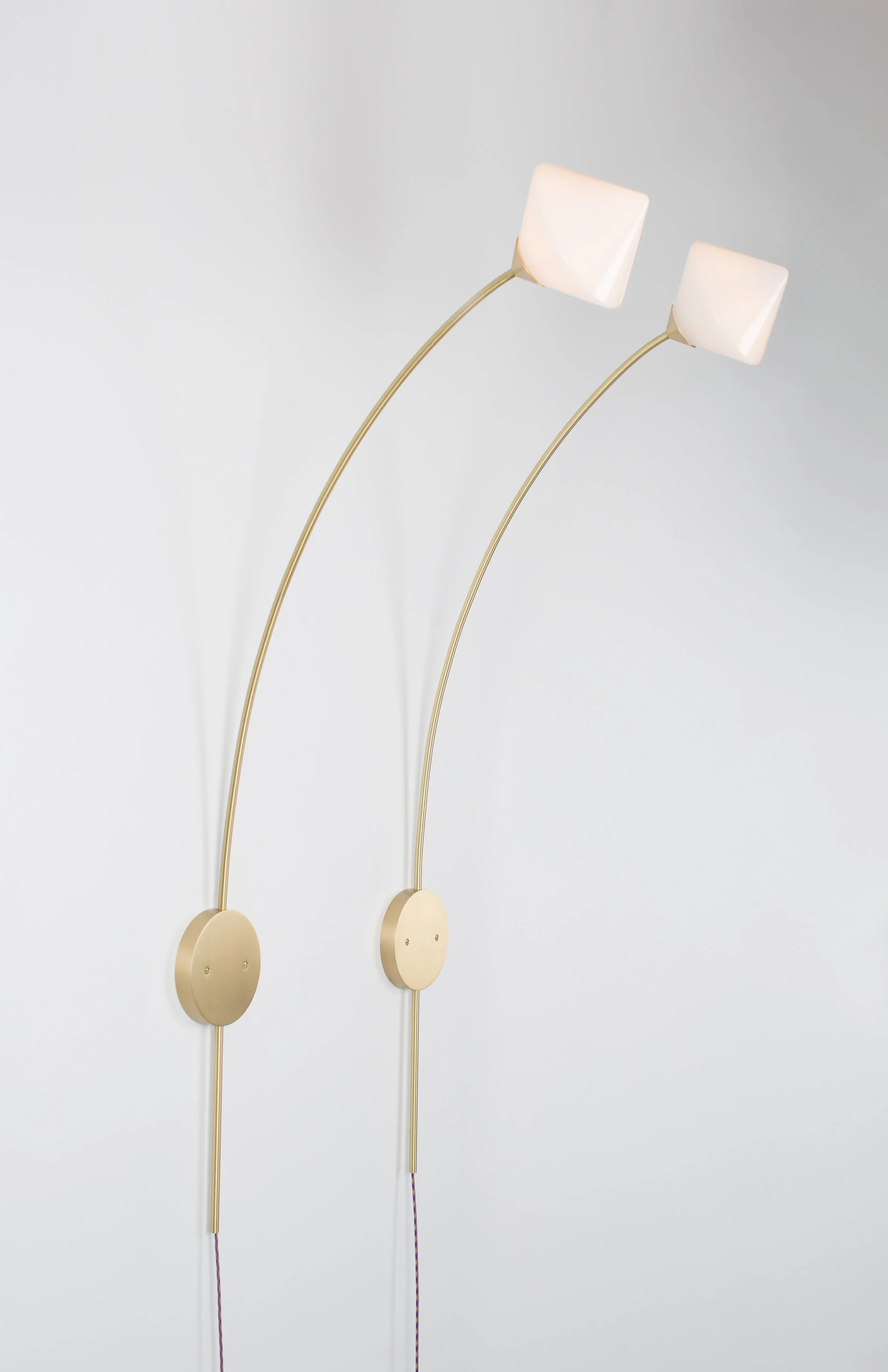
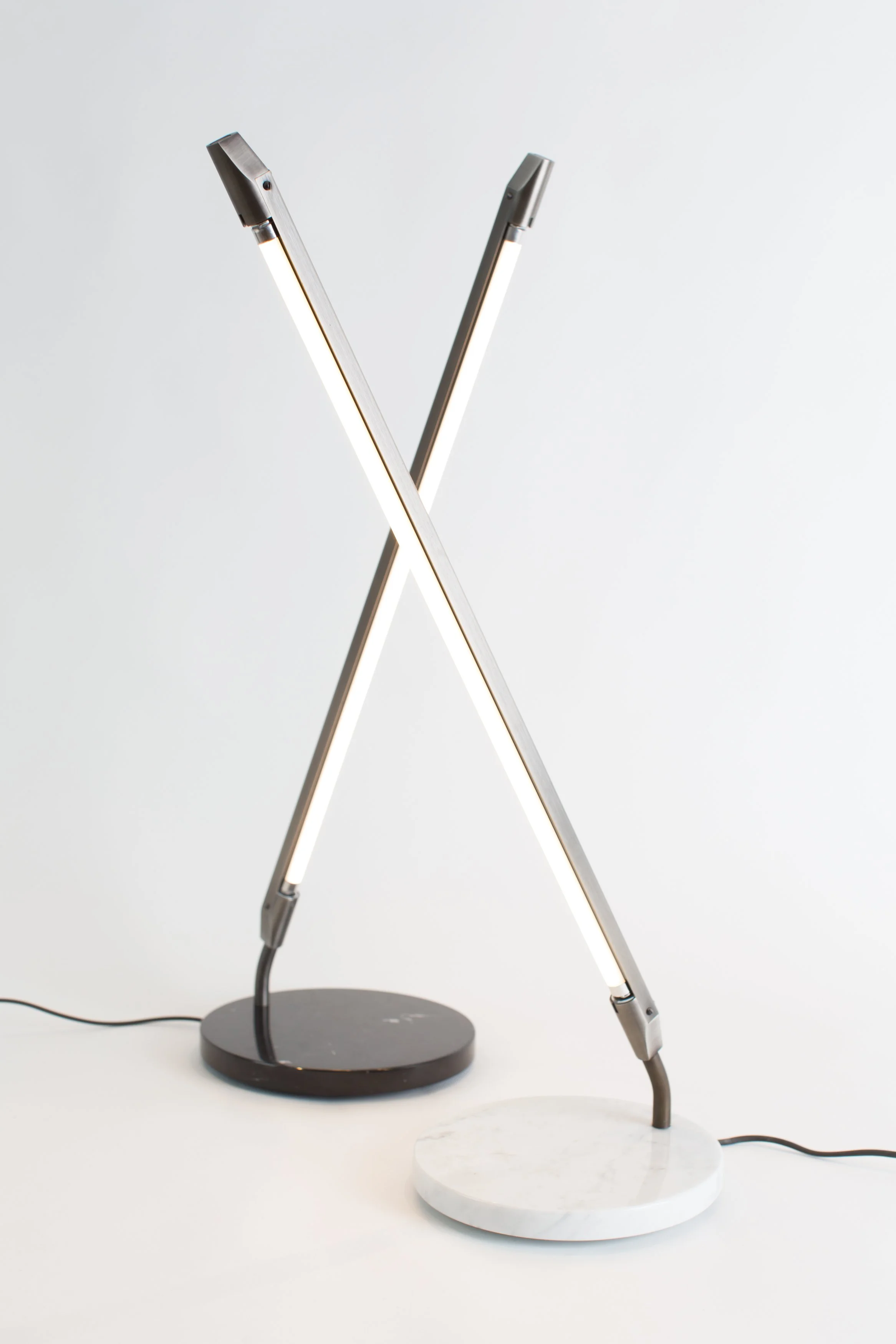
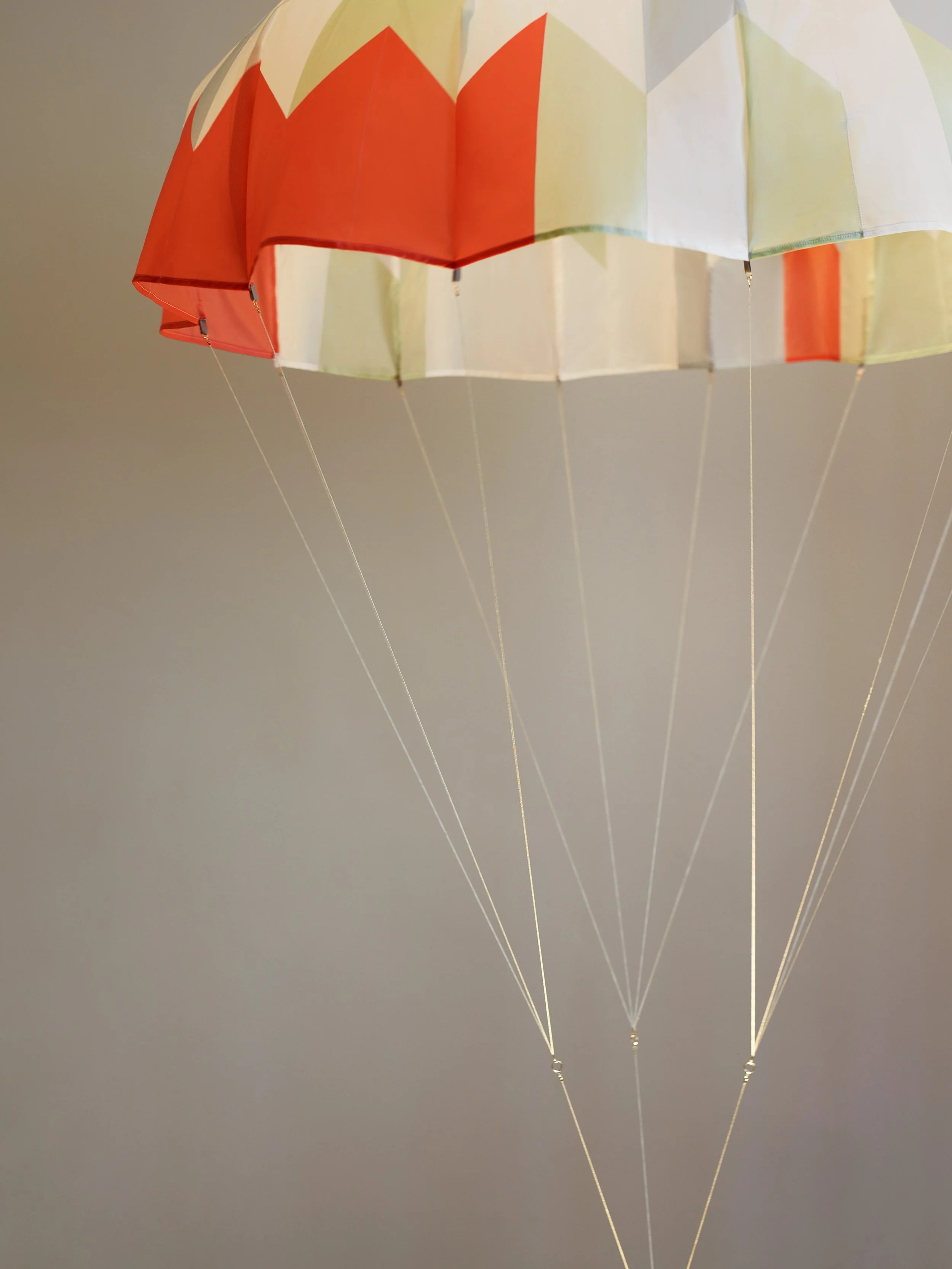
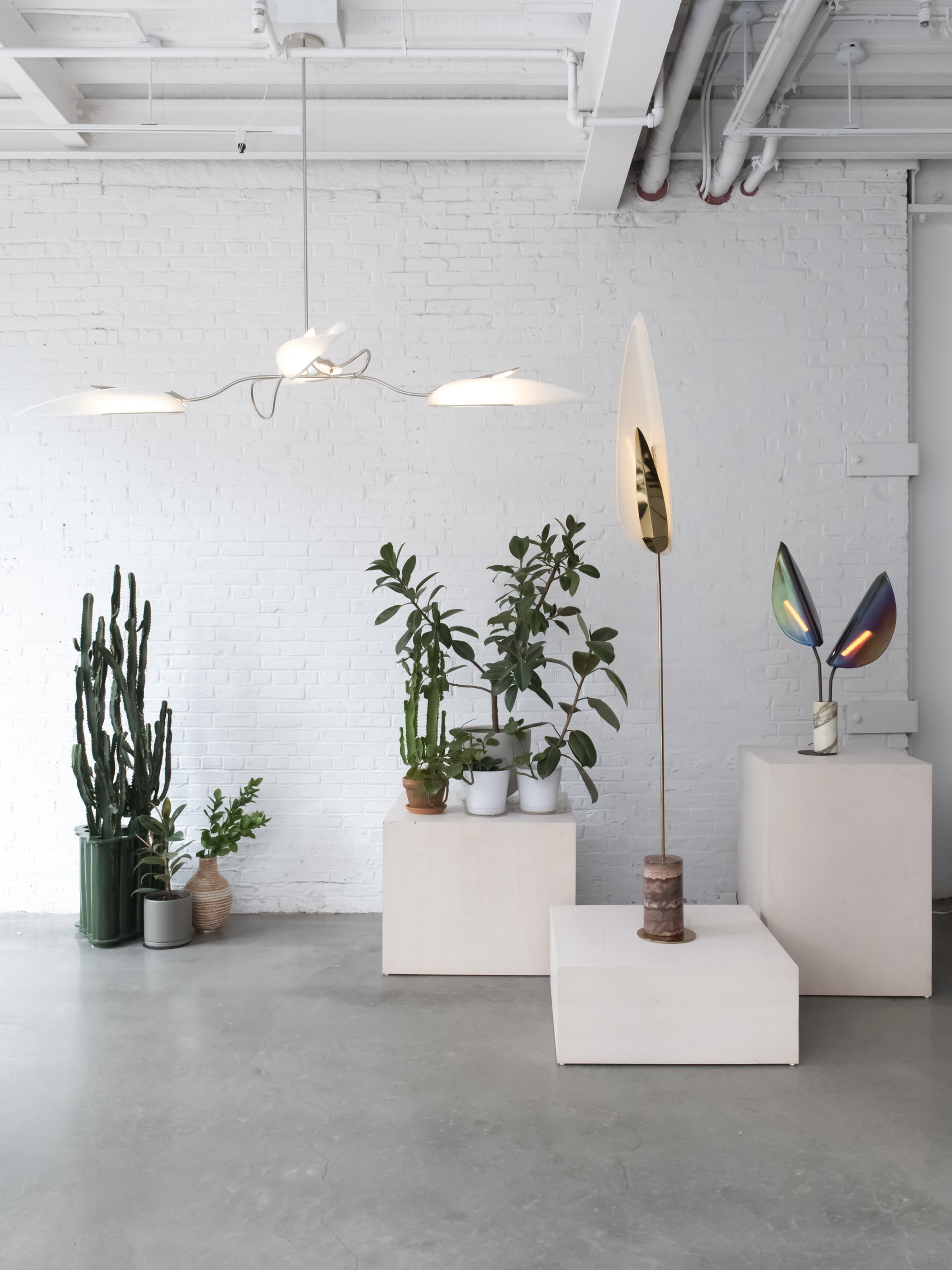
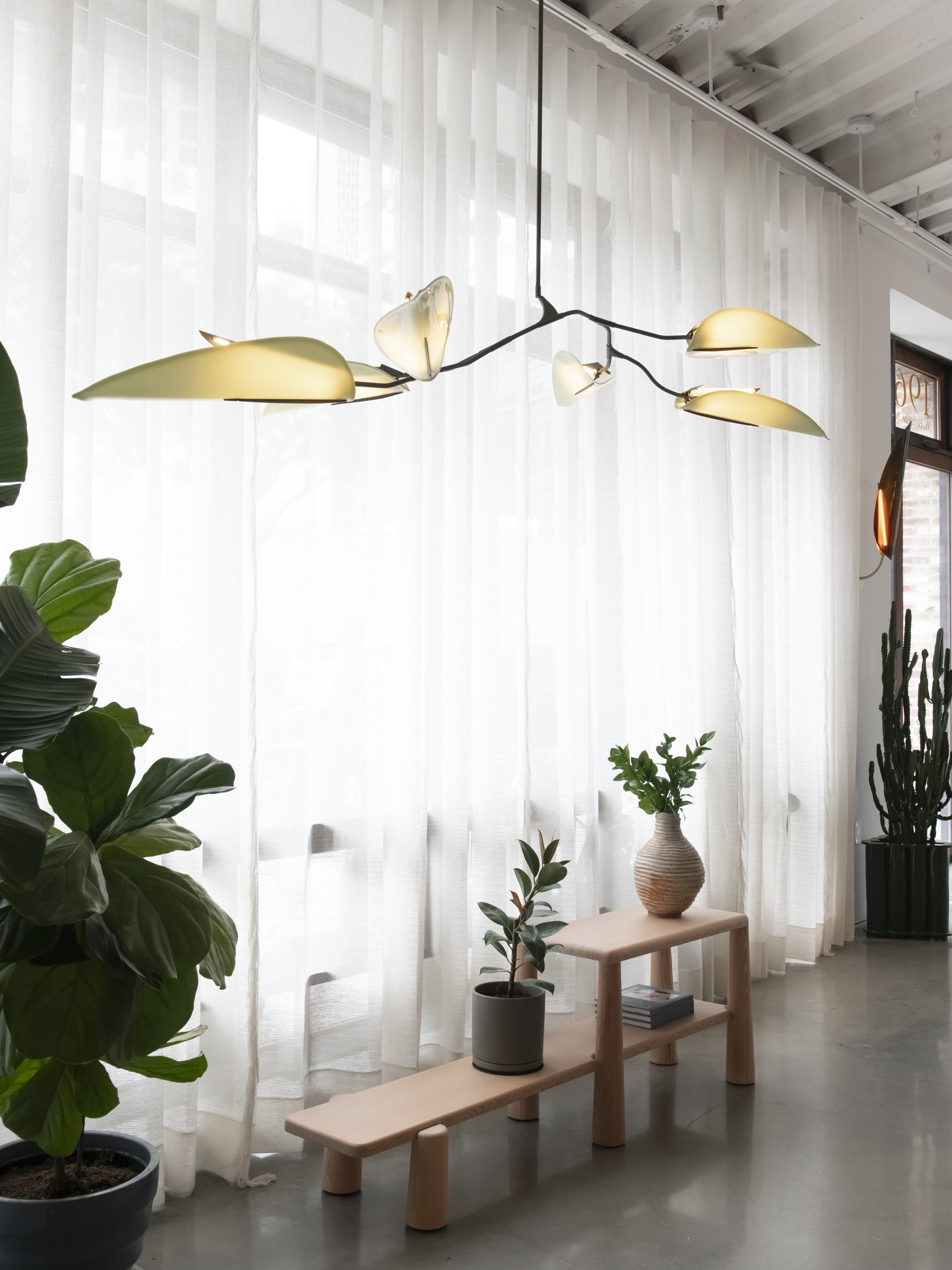
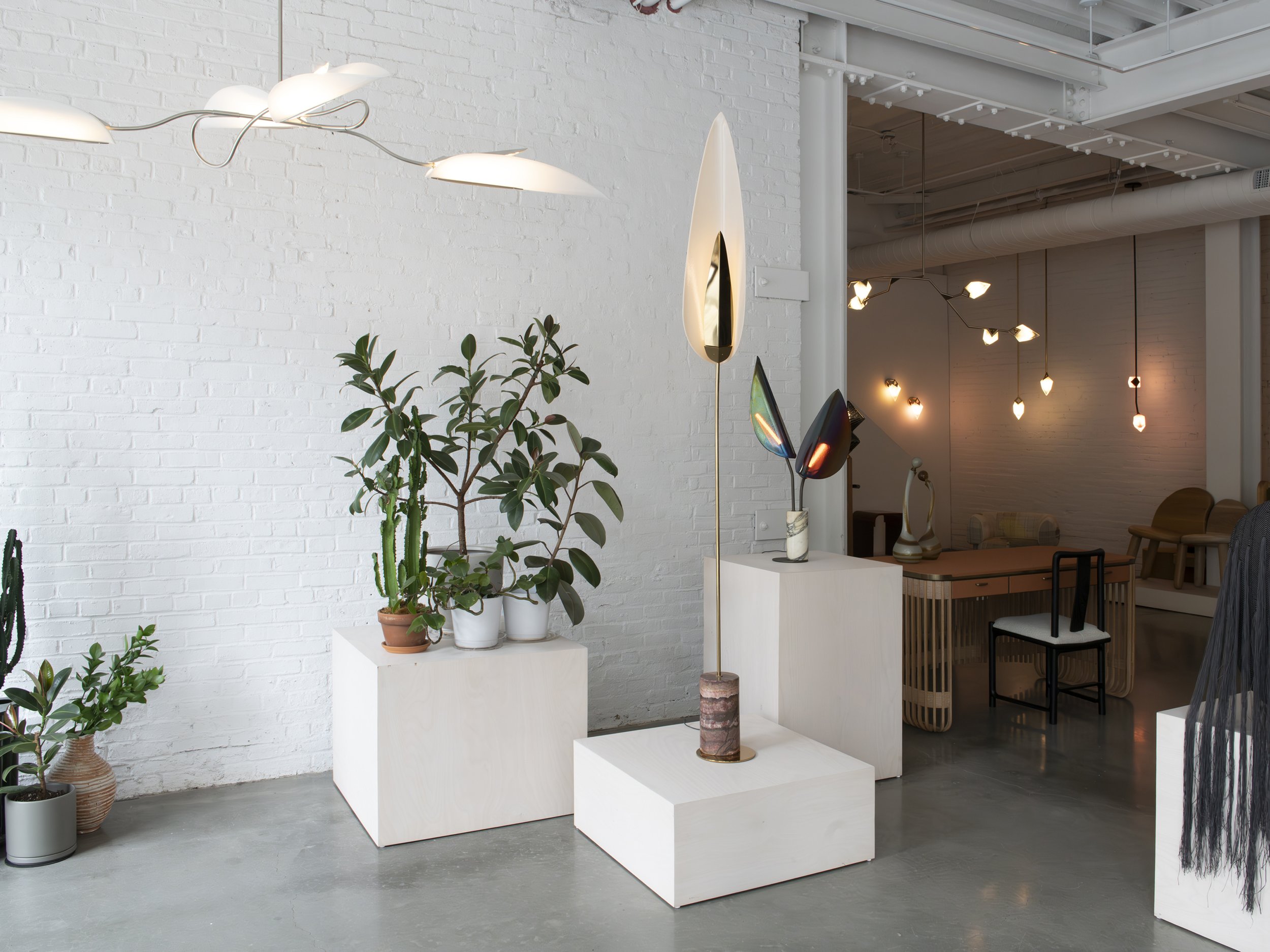
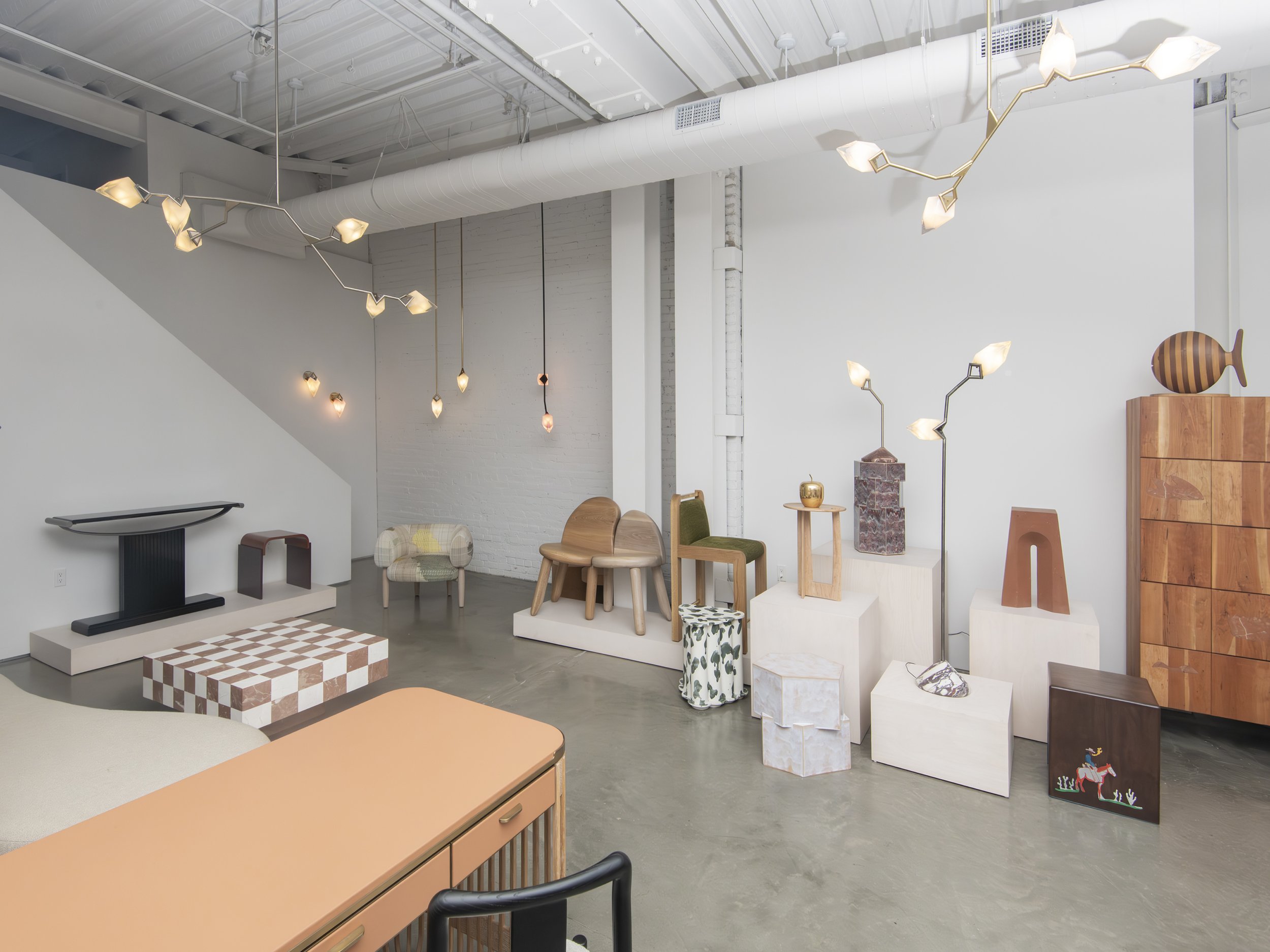
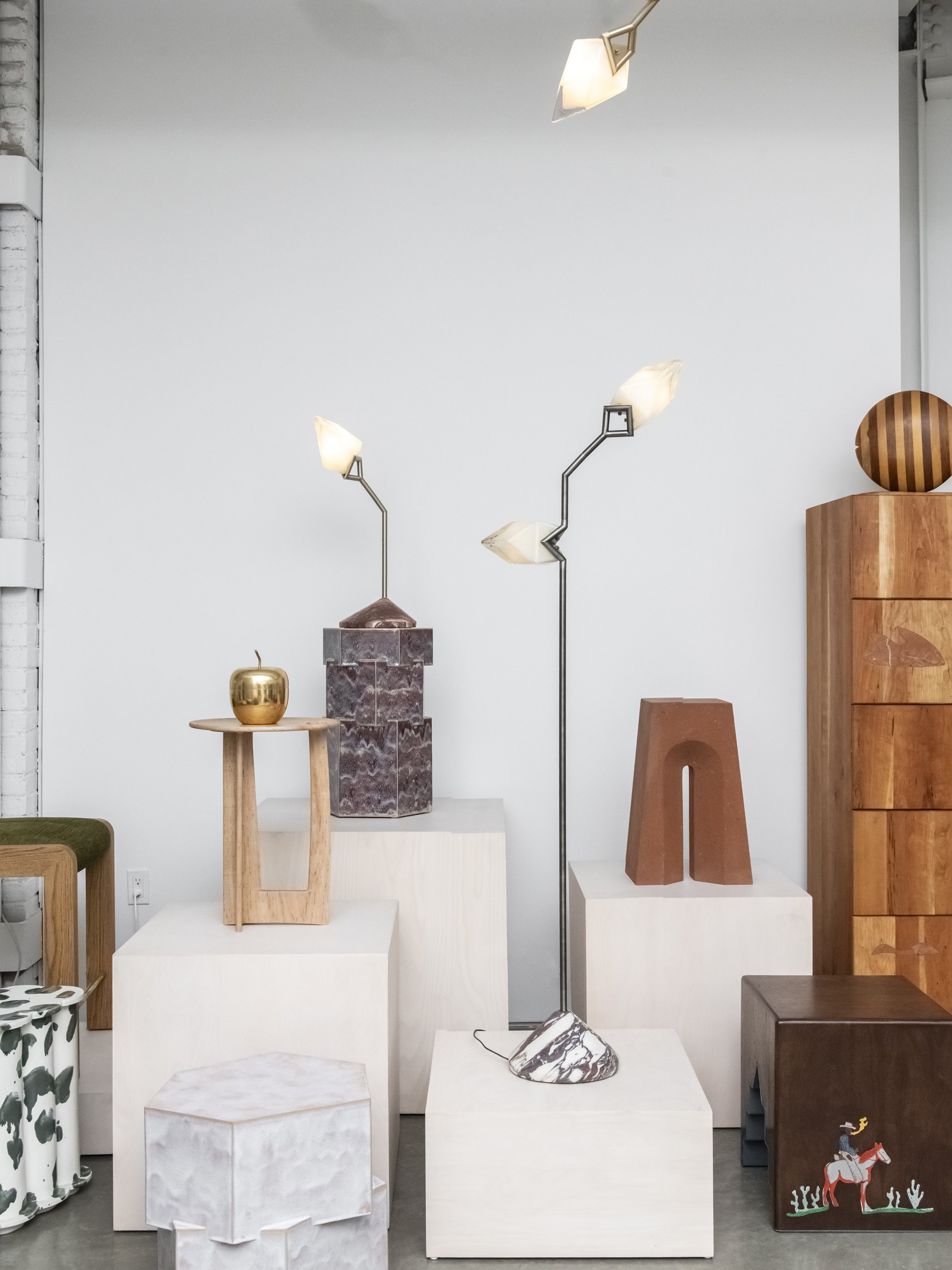
Hilda's practice is very hands on, embracing the natural variance in her process and her materials, resulting in each piece being slightly different than the others. She works volumetrically, building up forms with her signature and unique use of Jesmonite and then manipulating each to her vision. Bec, by contrast, works in a more engineered way, designing intricate parts for manufacture. She views these pieces as her “kit of parts” from which she creates a multitude of forms. Bec approaches form less volumetrically than Hilda, using LED tubes as lines of light to draw with, or the repetition of planar forms to create a volume.
It is these differing approaches to form and process which gives an opportunity for these new pieces – Bec's more airy and linear sense of form creates a space in which Hilda's more volumetric pieces are framed and showcased. Hilda's more organic sensibility balances Bec's more precise and mechanical one.
The collaboration between Bec Brittain and Hilda Hellström stems from an appreciation of each other's contrasts, and a belief that they could be melded and compliment each other.
Hilda's practice is very hands on, embracing the natural variance in her process and her materials, resulting in each piece being slightly different than the others. She works volumetrically, building up forms with her signature and unique use of Jesmonite and then manipulating each to her vision. Bec, by contrast, works in a more engineered way, designing intricate parts for manufacture. She views these pieces as her “kit of parts” from which she creates a multitude of forms. Bec approaches form less volumetrically than Hilda, using LED tubes as lines of light to draw with, or the repetition of planar forms to create a volume.
It is these differing approaches to form and process which gives an opportunity for these new pieces – Bec's more airy and linear sense of form creates a space in which Hilda's more volumetric pieces are framed and showcased. Hilda's more organic sensibility balances Bec's more precise and mechanical one.


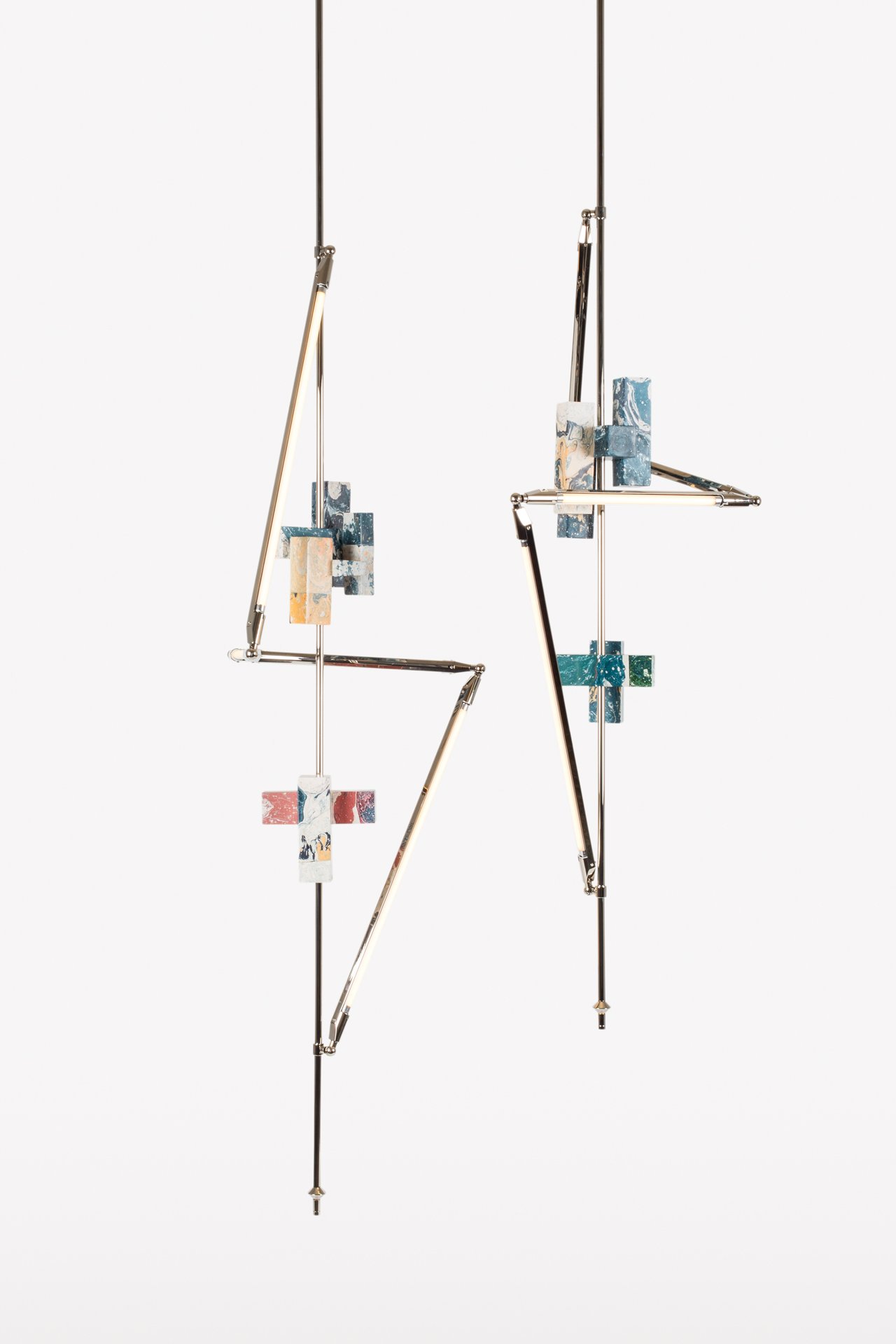 Image 1 of 28
 Image 2 of 28
 Image 3 of 28
 Image 4 of 28
 Image 5 of 28
 Image 6 of 28
 Image 7 of 28
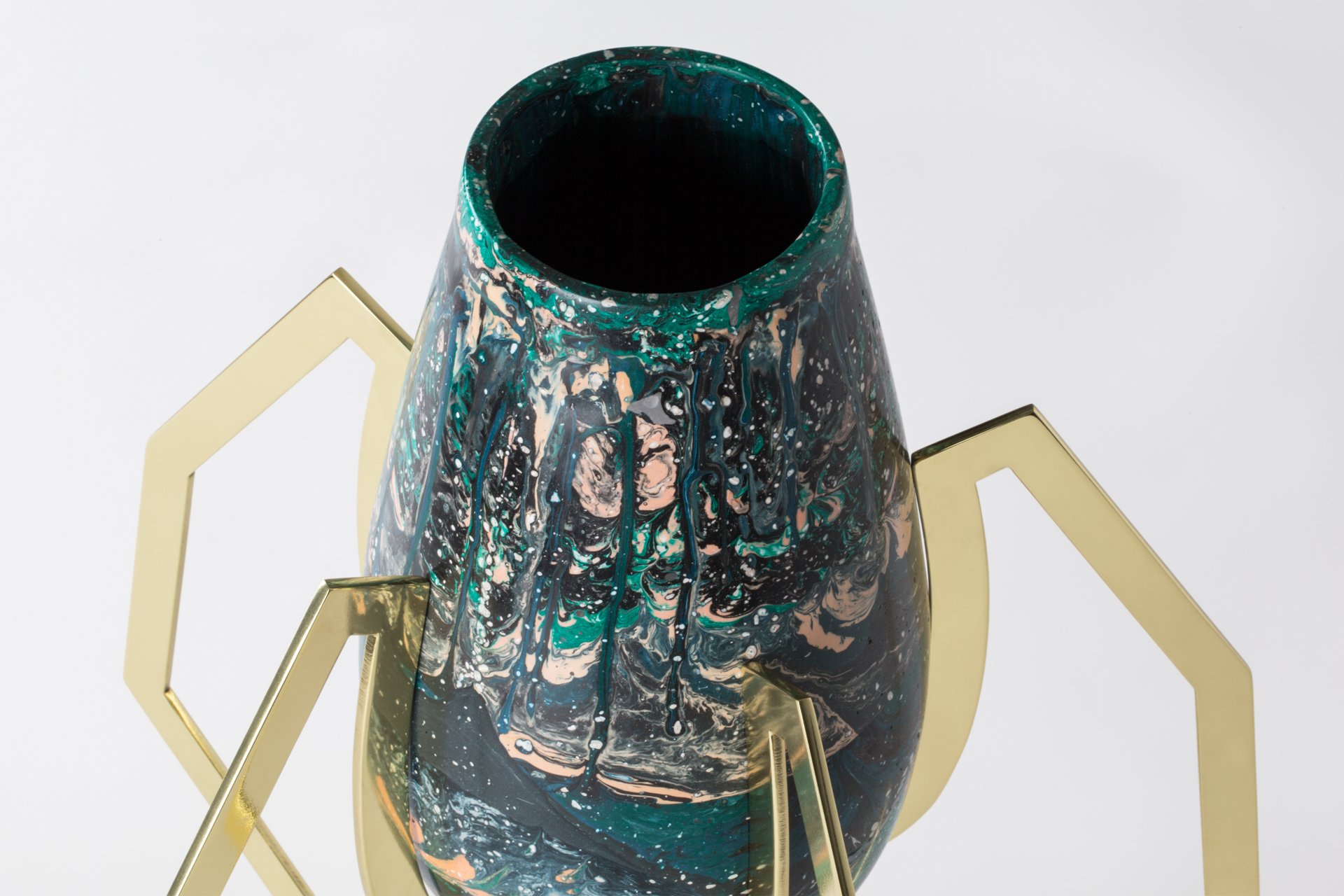 Image 8 of 28
 Image 9 of 28
 Image 10 of 28
 Image 11 of 28
 Image 12 of 28
 Image 13 of 28
 Image 14 of 28
 Image 15 of 28
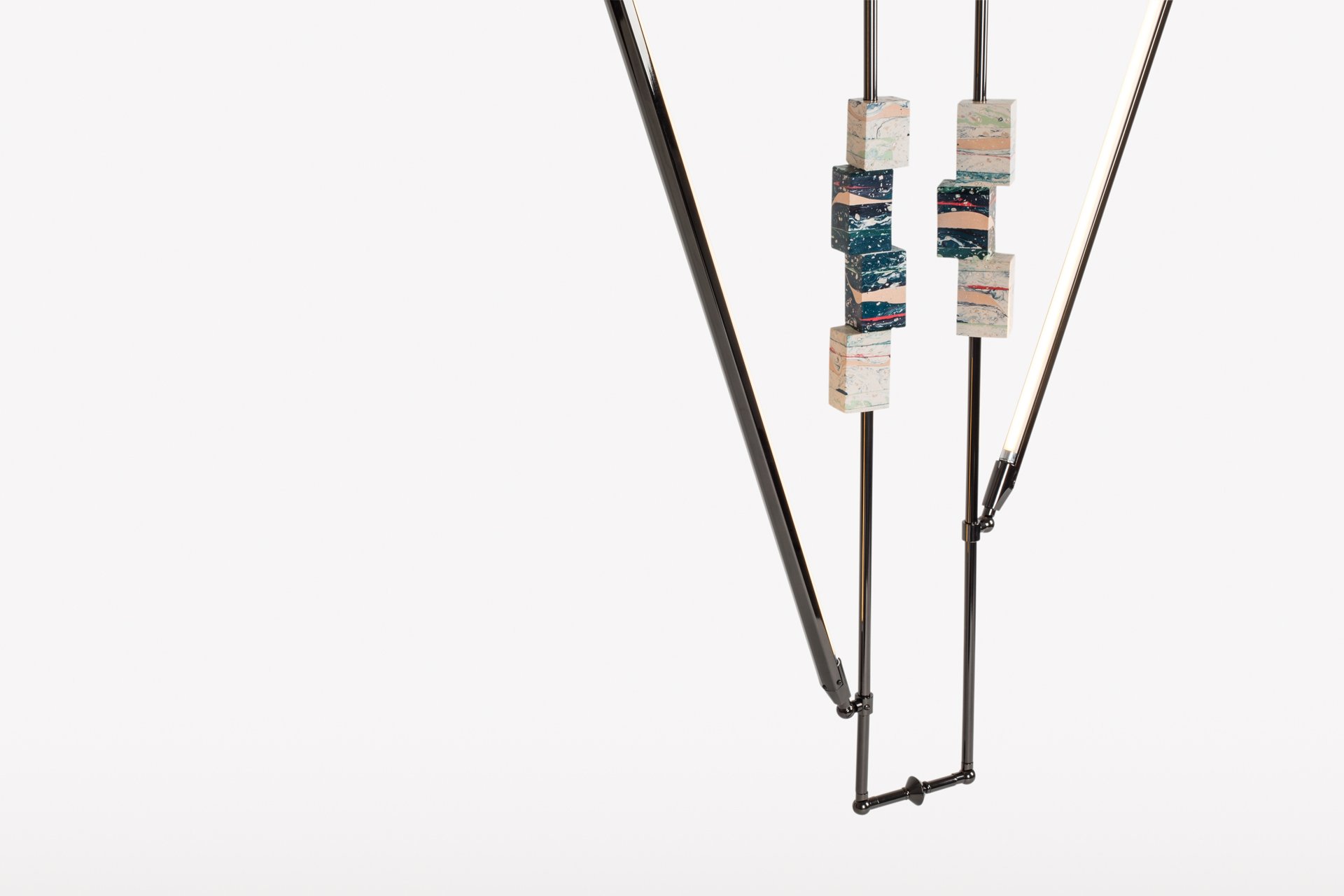 Image 16 of 28
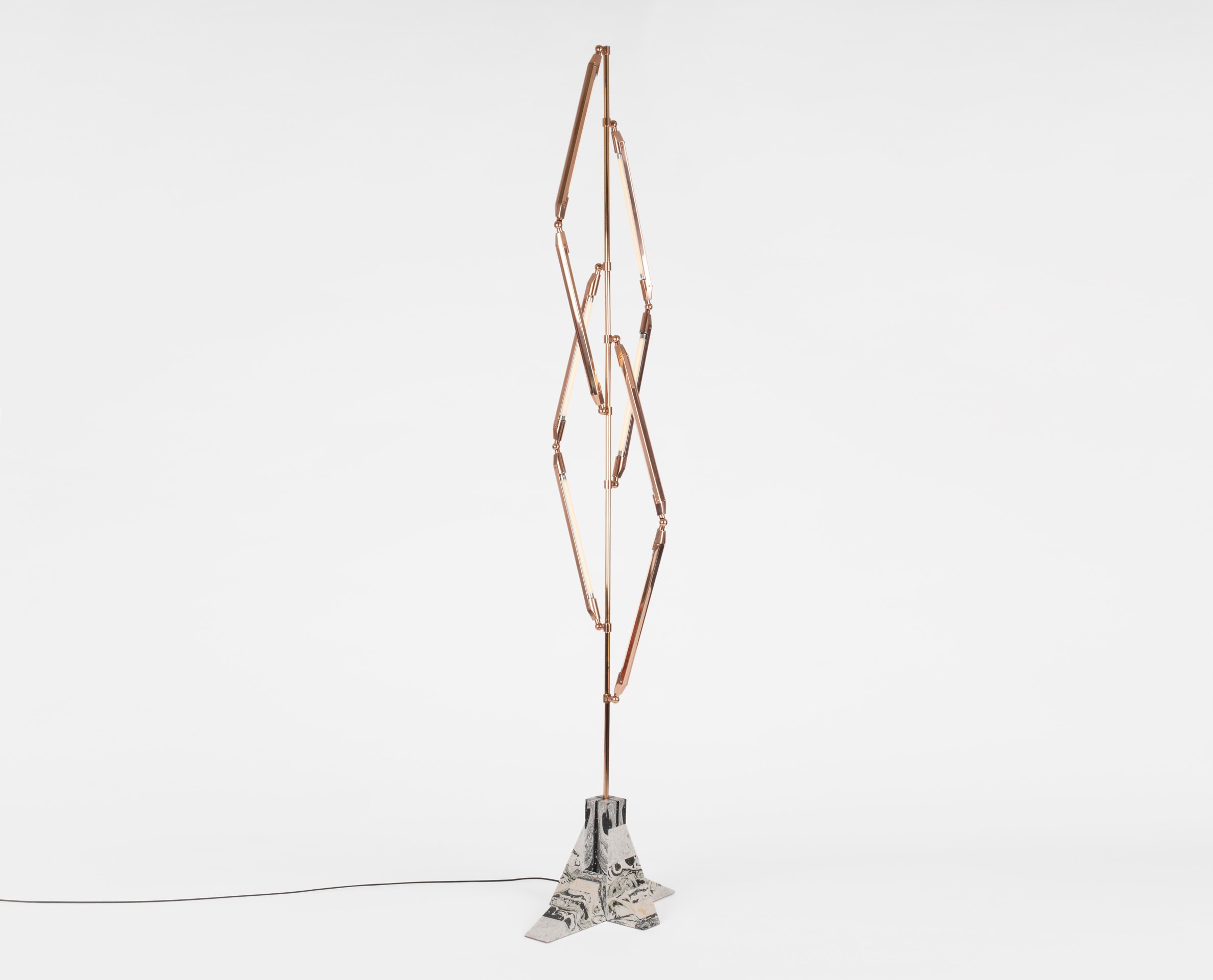 Image 17 of 28
 Image 18 of 28
 Image 19 of 28
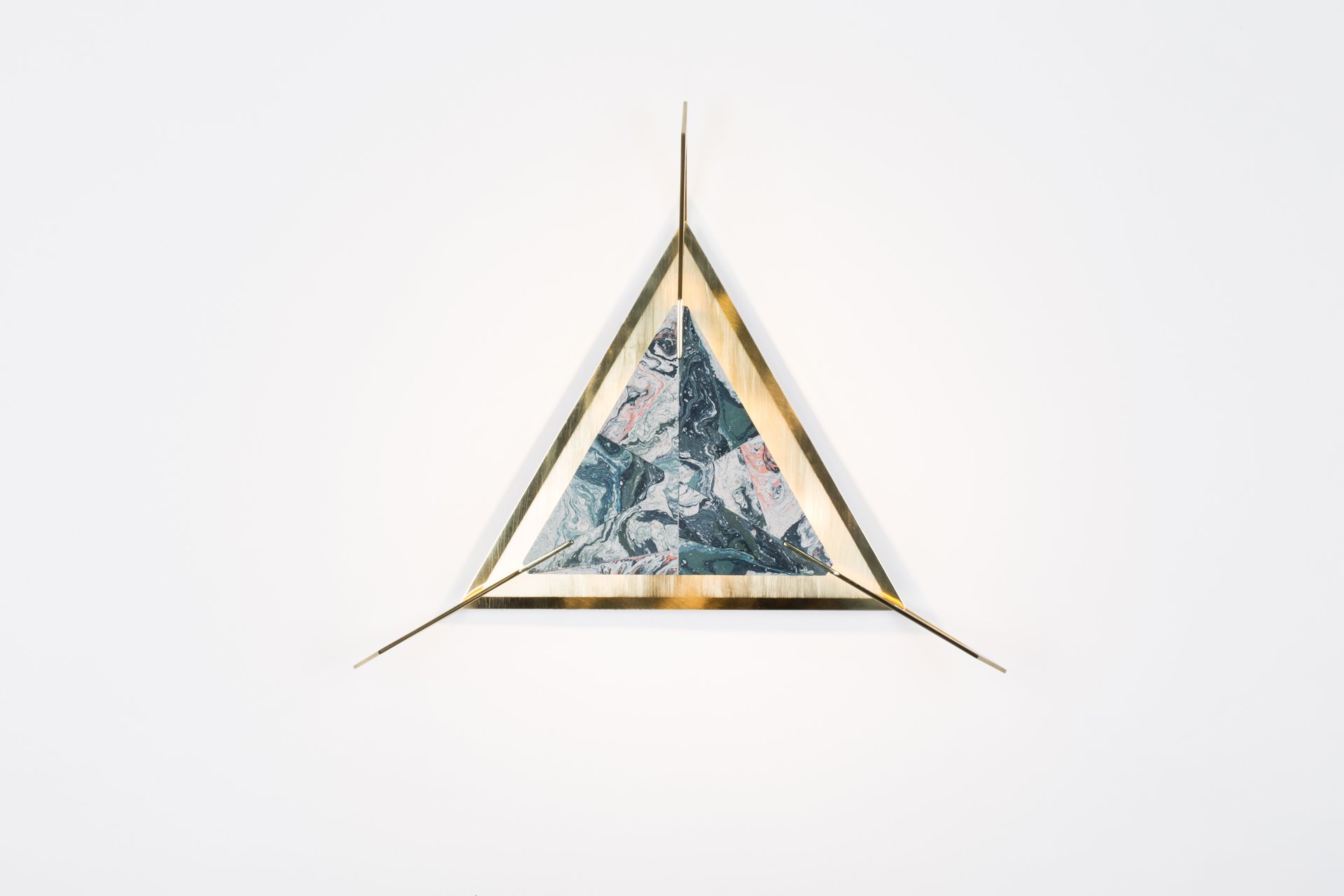 Image 20 of 28
 Image 21 of 28
 Image 22 of 28
 Image 23 of 28
 Image 24 of 28
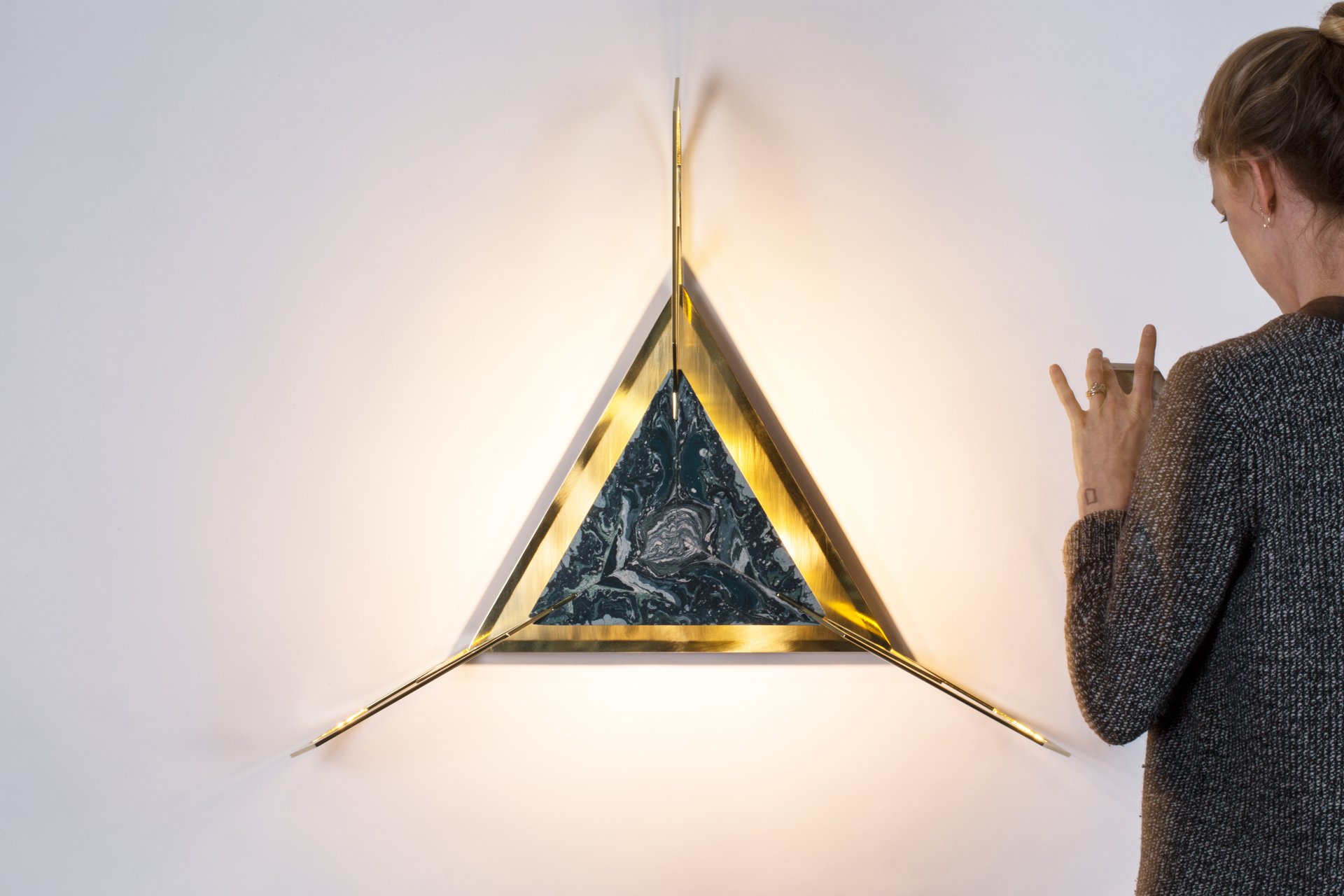 Image 25 of 28
 Image 26 of 28
 Image 27 of 28
 Image 28 of 28